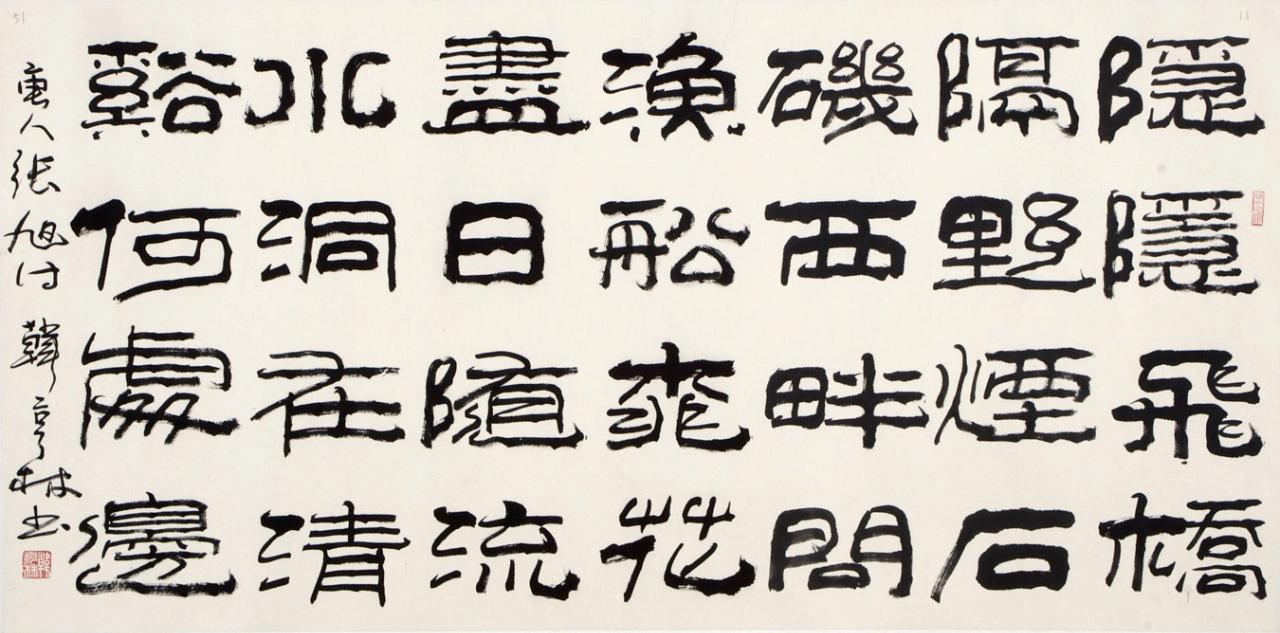
Han Henglin: A Distant Heart Gives Rise to Infinite Forms; A Clear Mind Stirs Waves in the Sea of Ink
Ink is never applied lightly, nor is the brush wielded without deep feeling. Before the blank scroll is even unfurled, with the brush poised and eyes gazing ahead, the mind is already wandering freely. Han Henglin often says that the essence of calligraphy lies in profound contemplation, with the highest value placed on elegance and character. Such a person does not merely seek fame through technical skill but pursues the very principles of the art and delves into its origins. Quietly residing in his studio, his heart embraces the vastness of all things. Every stroke on the paper reflects the landscapes of his inner world; every rise and fall of the brush reveals his true temperament.
He draws upon ancient methods without being constrained by tradition, inheriting the wisdom of past masters while developing his own distinctive style. His control of pressure, rhythm, and movement is as fluid as drifting clouds and flowing water; his variation of pace and structure resembles pine trees swaying in the breeze. Han Henglin deeply understands that true power lies hidden in the brush's tip, and the flow of ink carries a solemn strength. In his writing, the pace may vary—sometimes slow, sometimes fast—appearing leisurely yet full of energy, simple yet rich. Like a dragon dancing across the paper, the concealed strength within each stroke emerges with deliberate grace.
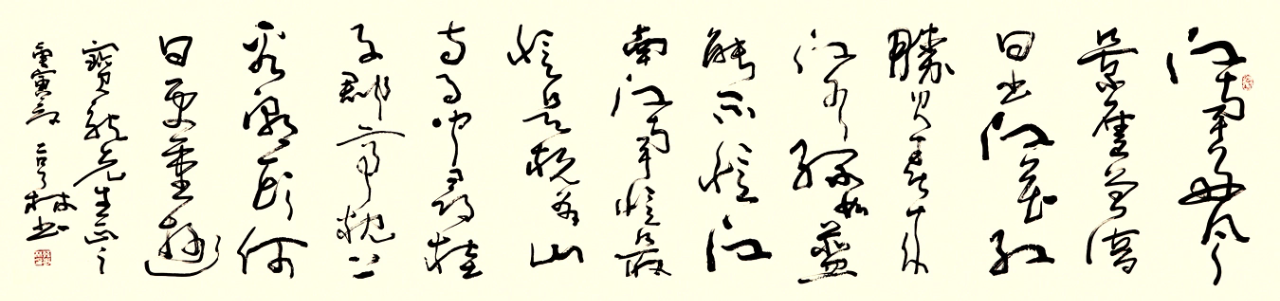
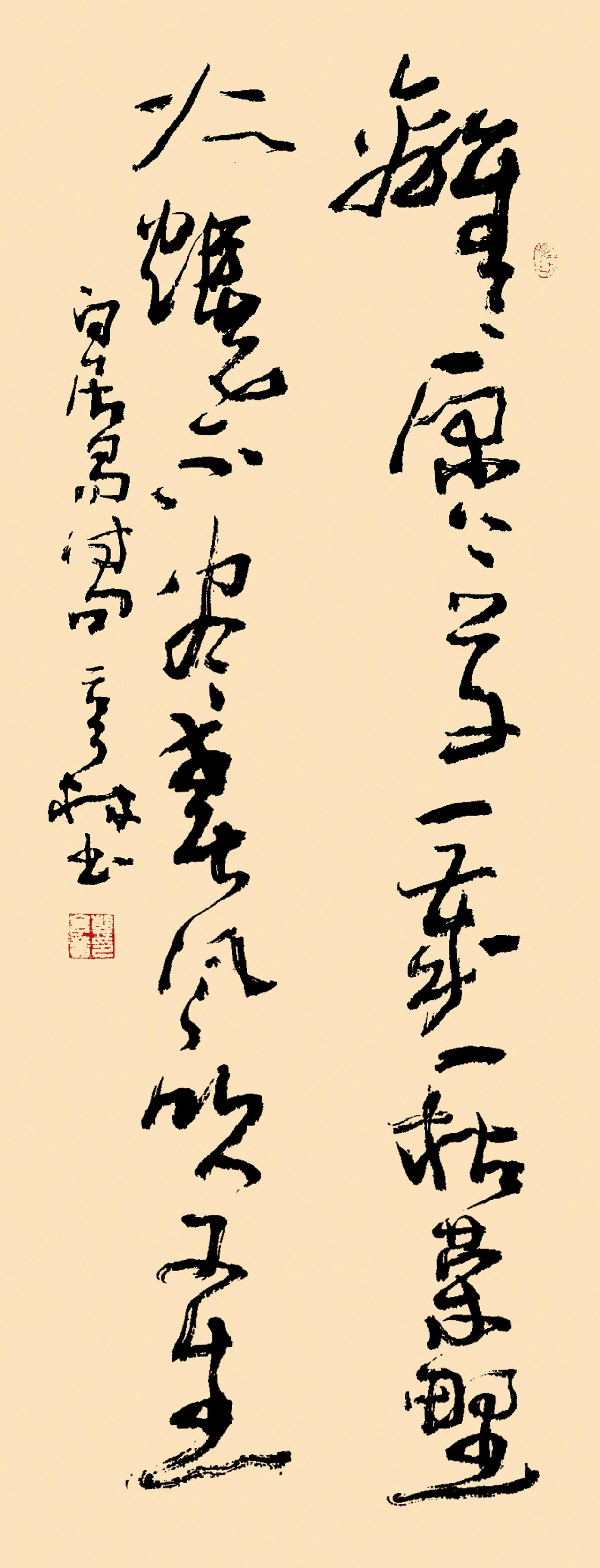
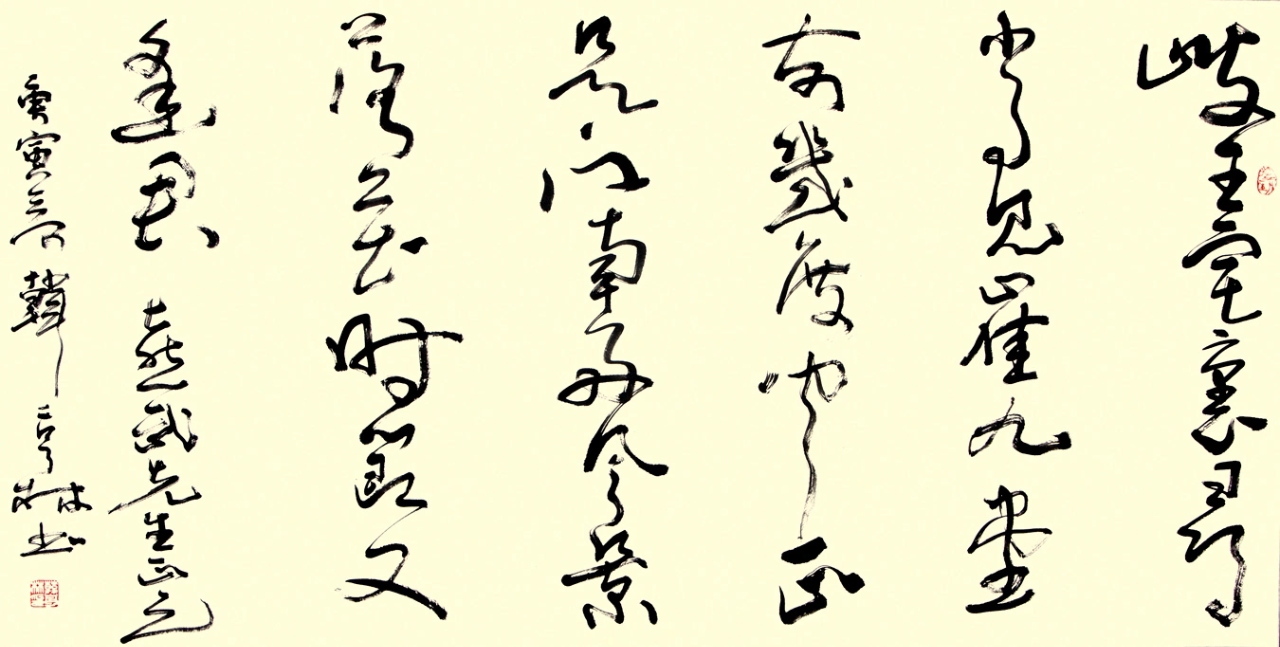
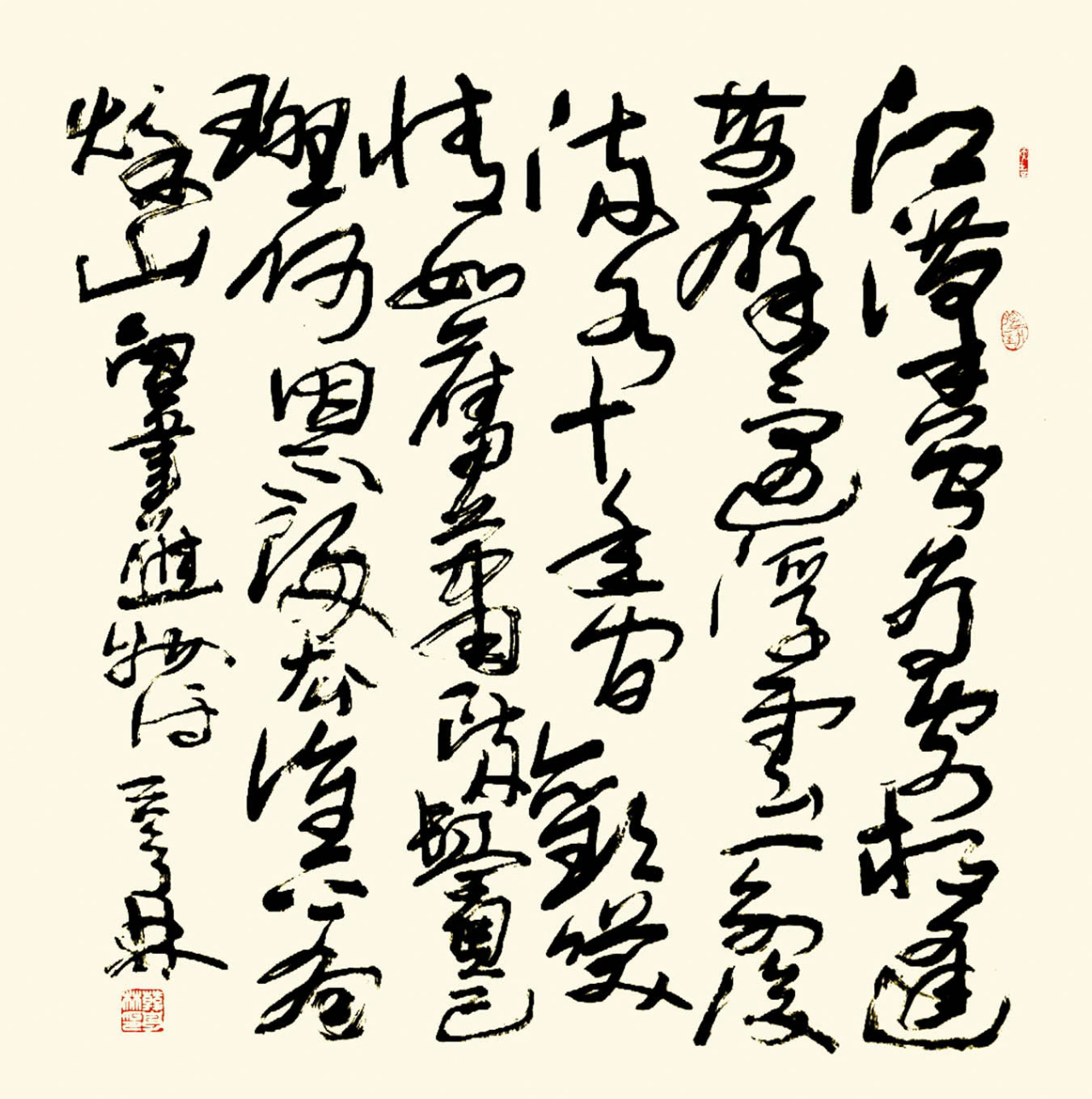
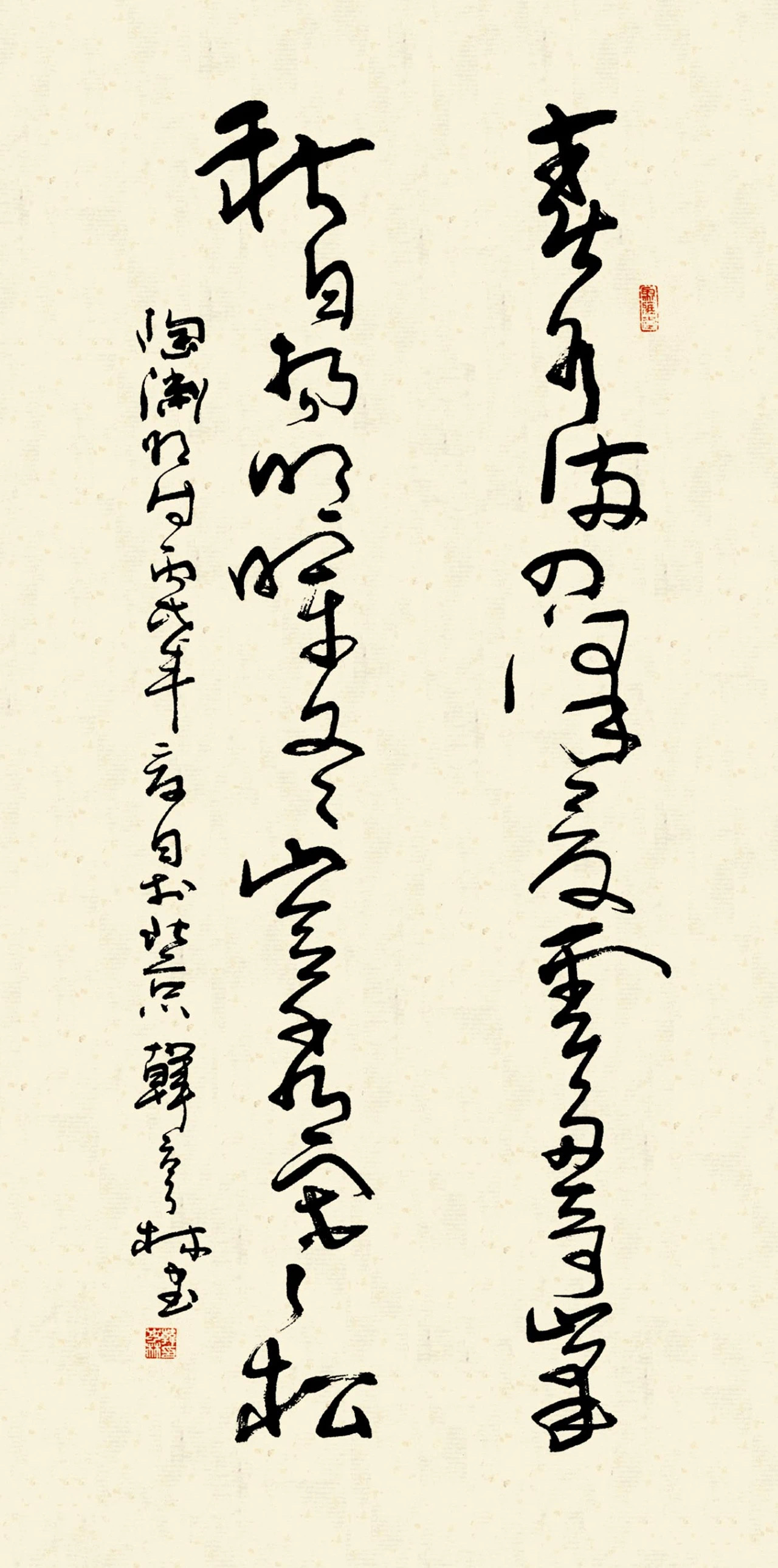
He does not seek dramatic or strange effects but values dignity and elegance above all. Han Henglin's semi-cursive script flows with graceful continuity; the brushstrokes connect seamlessly. Transitions between beginnings, developments, turns, and conclusions are imbued with a dynamic rhythm that breathes life into the work. His writing respects the methods of the ancients while expressing his personal feelings. His cursive script is wild yet never reckless, unrestrained yet measured. Dots and strokes seem to leap with energy, producing an overwhelming momentum without falling into chaos. Between the brush and ink, a steady and open-minded character is revealed. What is most admirable is his ability to integrate the unrestrained spirit of cursive with the strict discipline of composition, resulting in works that balance rhythmic variation with structural coherence. Reading them feels like listening to the harmonious tones of qin and se (traditional Chinese instruments), their lingering resonance filling the air.
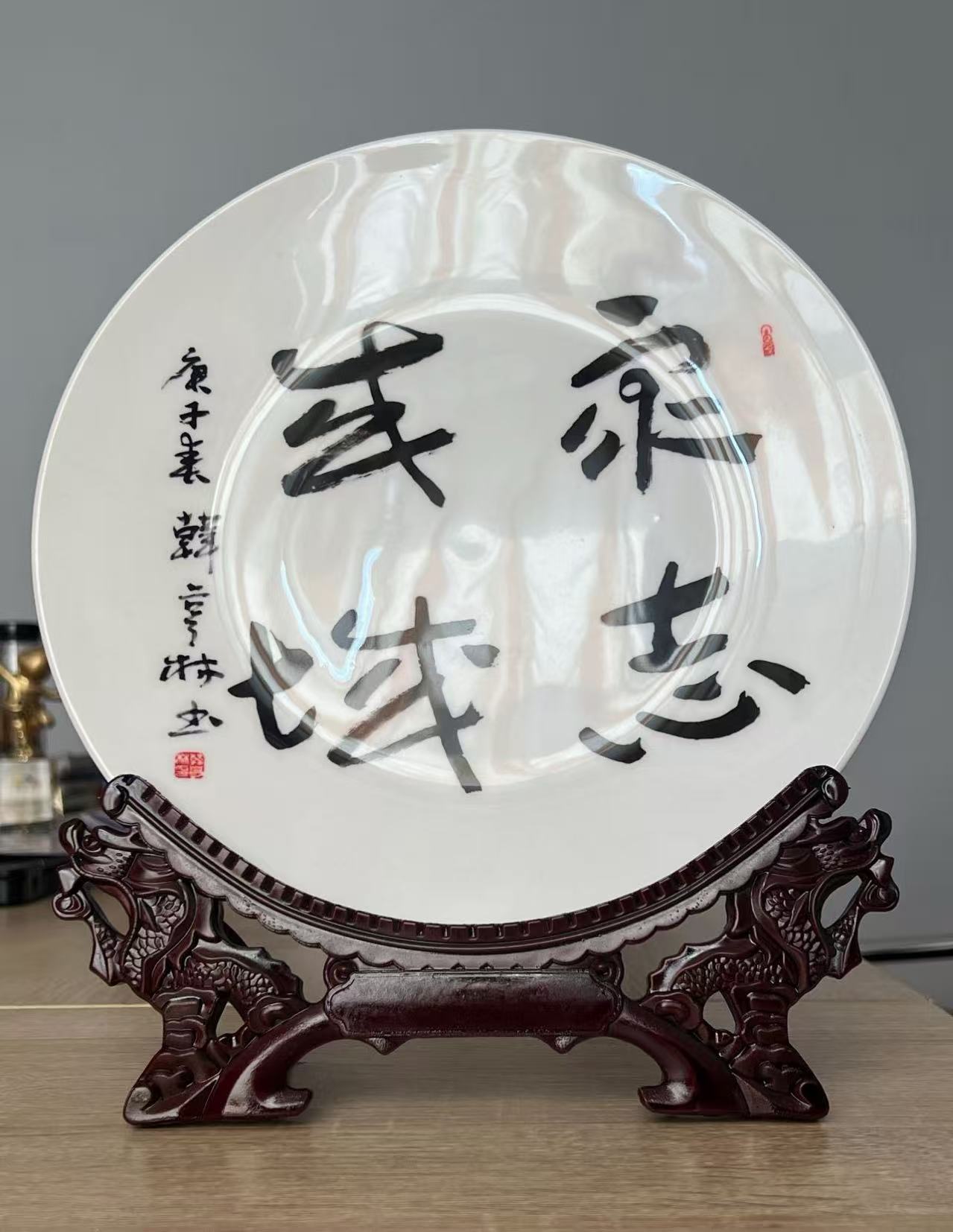
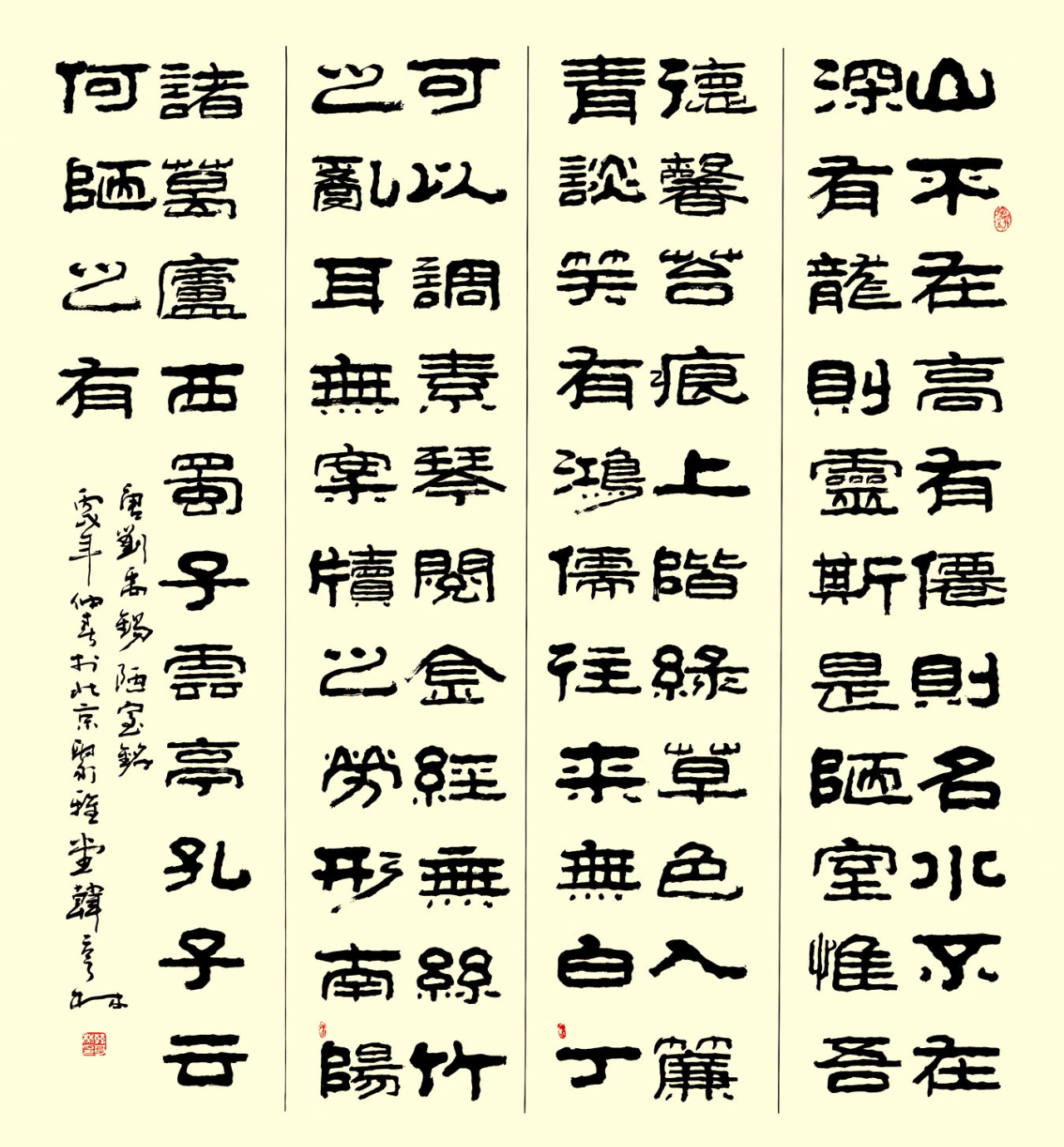
His clerical script is solid and ancient, with smooth, deliberate strokes. Han Henglin’s brushwork, marked by the "silkworm head and swallow tail" technique, seeks the lingering charm of engraved stone tablets. The structure is square yet unrestrained, the strokes expansive and powerful. Observing his clerical works, one sees freshness amid weight, and elegance concealed within antiquity. The composition is steady and dignified, standing tall like age-old steles, unyielding to wind and rain, impervious to the erosion of time.
Art is not only about technical skill but even more about a clear mind and distant vision. Contemplating the Way with a pure heart, he never tires of refining his craft. Whenever Han Henglin faces a blank scroll, he is wholly focused, repeatedly contemplating without carelessly applying a single stroke. He often says, "Art knows no end; the heart must remain as it was at the beginning." Thus, with every piece he approaches, it is as if in the company of noble companions; with every stroke, it feels like wandering through the mountains and forests, where mind and hand move as one, and the self merges with the surroundings.
Beyond the realm of brush and ink, Han Henglin also delights in poetry, classics, rites, and music. He studies ancient texts and seeks underlying truths, nourishing his art with literature and complementing his craft with learning. His heart holds refined sentiments, and his brush reveals spirited elegance. Never arrogant about his achievements, he aspires to reach greater heights. He dedicates himself to promoting art and teaching students, imparting wisdom with clarity and precision. From the young to the experienced, all benefit from his guidance. Cultivating both artistic skill and moral integrity, he earns the respect of his peers.
Unconcerned with fleeting fame or worldly gain, Han Henglin remains steadfast at his desk, practicing day and night. Amid the clamor of the world, he maintains his own serene space. True character does not lie in loud acclaim; genuine charm is often found in quiet contemplation. Thus, though his works may not dazzle at first glance, their appeal deepens over time. Observers find joy in their integrity; those who savor them are uplifted by their true essence.
His compositions, varying in density and spacing, break free from rigid formulas while remaining grounded in proper technique. In his freehand movements, one senses the rhythm of pine winds and flowing water; in the rise and fall of the brush, the distant call of a crane in the empty mountains. Even before the ink dries on the paper, his thoughts have already journeyed far. The heights he achieves in art are not the result of overnight effort; the attainment of his path is built upon years of dedicated cultivation. Thus, Han Henglin’s art is rich within and bright without, tranquil yet not dull, graceful yet not superficial.
Observing his works today, they unfold like drifting clouds and mist, like majestic mountains and rivers. They exude a lofty spirit and profound artistic conception. His journey in art stretches far, his aspirations reaching a thousand miles. Han Henglin continues to toil tirelessly, with a heart that knows no limits. With such spirit and dedication, upholding the path of art, he rightfully deserves a place of honor in the world of calligraphy.

 首页>>新闻频道>>头条